


Foley, Baron, Metzger & Juip, PLLC is pleased to announce the hiring of attorney Matthew (Matt) McCann as an Associate Principal with the firm effective July 28. Member Richard Baron made the announcement.
Matt brings a wealth of experience to the firm, and has a diverse legal background including experience leading the research, investigation, and litigation of complex commercial, administrative, civil rights and white-collar criminal proceedings. He has significant experience in the insurance industry, providing coverage opinions, representing primary and excess carriers in coverage disputes, and serving as monitoring and direct defense counsel in cases with significant exposure at the excess and/or umbrella level of insurance coverage.
Matt has represented both municipalities and private entities in litigating land use and zoning disputes.
and worked extensively in the area of special education law. His special education law experience includes litigating against the New York City Department of Education in both administrative and federal proceedings to ensure the implementation of a free appropriate public education for students with special needs in all five boroughs of New York City.
Matt also worked as an associate alongside one of New York City’s top criminal defense attorneys and had significant responsibility in the defense of individuals and entities charged with white-collar crimes.
As an active member of the legal community, Matt hasheld leadership roles for the American Bar Association (Young Lawyers Division Criminal Justice Committee, Vice-Chair), Nassau County Bar Association (Federal Courts Committee, Co-Chair) and New York City Bar Association (Criminal Law Committee Criminal Discovery Subcommittee Chair).
Matt was selected as a Super Lawyers’ Rising Star in White Collar Criminal Defense and Employment Litigation and as a Super Lawyer in Business Litigation and Education Litigation. He has also held Martindale-Hubbell’s AV® Preeminent rating since 2015.
He received his JD from Brooklyn Law School in 2005, where he previously served as an Adjunct Professor of Legal Writing, and his B.S. from Cornell University in 2001.
“Matt has a strong background with significant litigation experience and is already proving to be a talented, versatile member of our team,” Baron said. “He is a leader in the legal community and his multifaceted skill-set will be of great value to our clients.”
August 2021
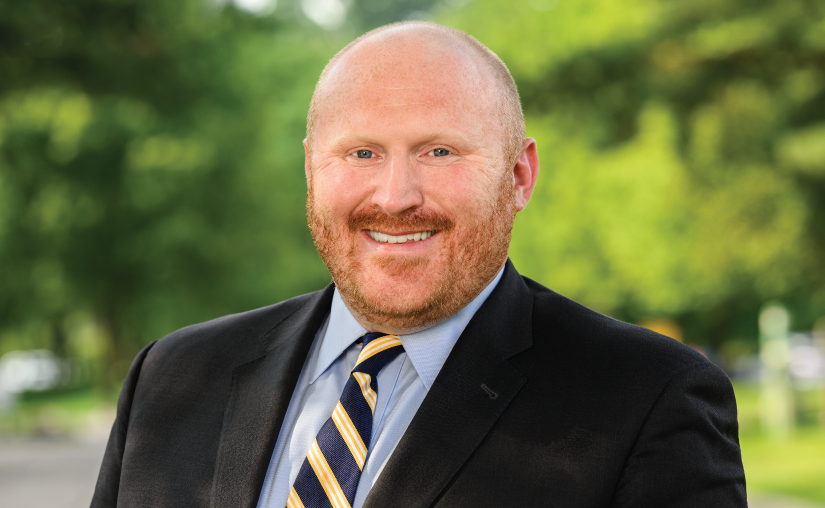
Attorney Matthew McCann Joins Foley, Baron, Metzger & Juip as Associate Principal
Foley, Baron, Metzger & Juip, PLLC is pleased to announce the hiring of attorney Matthew (Matt) McCann as an Associate Principal with the firm effective July 28. Member Richard Baron made the announcement. Matt brings a wealth of experience to the firm, and has a diverse legal background including experience leading
July 2021

Silvia Mansoor Joins Foley, Baron, Metzger & Juip as an Associate Attorney
Foley, Baron, Metzger & Juip, PLLC is pleased to announce the hiring of Silvia Alexandria Mansoor as an Associate attorney, effective July 12, 2021. Randall Juip, Member, made the announcement. Silvia’s work will focus on defending health care professionals and organizations in complex medical malpractice claims and business dispute claims. Silvia is
July 2021

Attorney Nicholas Tatro Promoted to Associate Principal
Foley, Baron, Metzger & Juip, PLLC (FBMJ) is pleased to announce the promotion of attorney Nicholas Tatro from Senior Associate to Associate Principal, effective July 1, 2021. Richard Baron, Member, made the announcement. Tatro’s practice focuses on environmental, toxic tort, mass tort and products liability litigation, permitting and compliance with environmental
July 2021

SCOTUS Sides with Amish Community on RLUIPA Land Use Claim
The Supreme Court of the United States (SCOTUS) has finally reached the merits of a RLUIPA land use matter – sort of. To the extent the court touched on the RLUIPA questions in Mast v. Fillmore County on July 2nd, the overarching message from at least one justice was clear:
June 2021

Amish Community Waiting to See if SCOTUS Will Review RLUIPA Claim
It appears as though another term of the Supreme Court will close without the high court evaluating a religious land use claim under The Religious Land Use and Institutionalized Persons Act (RLUIPA). An Amish community from Minnesota had asked the U.S. Supreme Court to consider whether state laws requiring the
June 2021

Maryland Church Awarded $1.1m in RLUIPA Verdict Over County Environmental Considerations
For more than 20 years now, the Religious Land Use and Institutionalized Persons Act (RLUIPA) has sought to ensure houses of worship are treated the same as similar secular land uses, regardless of other considerations or laws that might be implicated. A recent case out of Maryland reaffirms this concept,
June 2021

FBMJ Attorney Featured Speaker at St. Mary Mercy’s Resident Retreat
On June 23, 2021, FBMJ attorney, Mitchell C. Jackson, presented “Defending Your Care and Keeping Lawyers Out of Your Hair” to Emergency Medicine residents, as part of St. Mary Mercy’s annual Resident Retreat. The presentation included discussions regarding the anatomy of a medical malpractice lawsuit; the unique challenges associated with electronic health
June 2021

FBMJ Attorneys Publish Article in the American Journal of Roentgenology
FBMJ attorneys, Randall A. Juip and Anthony D. Pignotti recently co-authored an article entitled, “The Medical Malpractice Deposition: A Review for Radiologist Defendants,” which was accepted for publication in the American Journal of Roentgenology (AJR 2021 June 9), a publication of the American Roentgen Ray Society (ARRS). The article was co-authored with radiologists, Casey Stewart Branach,
June 2021

The Early Bird Gets the Worm (& Expert Witness)
In deciding an issue of first impression, the Michigan Court of Appeals, in the published case of Teutsch v. Van De Ven, adopted a new test to determine whether an expert witness should be disqualified from serving as a defense expert after he had issued a bright line rule that
April 2021

Unlicensed = Uncapped?
Claims against an unlicensed medical assistant employed by a non-profit medical institution sound in ordinary negligence and are not subject to the non-economic medical malpractice damages cap—at least according to the Michigan Court of Appeals’ recent published decision in Estate of John Swanzy v. Edward J. Kryshak, M.D., et al. If it